Hey there! I'm a supplier of Ah Slurry Pumps, and today I wanna chat about one of the most common questions we get: What is the maximum viscosity an Ah Slurry Pump can handle?
First off, let's quickly understand what viscosity is. In simple terms, viscosity is a measure of a fluid's resistance to flow. Think of honey and water. Honey is thick and flows slowly, so it has a high viscosity. Water, on the other hand, flows easily and has a low viscosity. When it comes to slurry, which is a mixture of solids and liquids, the viscosity can vary widely depending on factors like the type of solids, their concentration, and the liquid used.
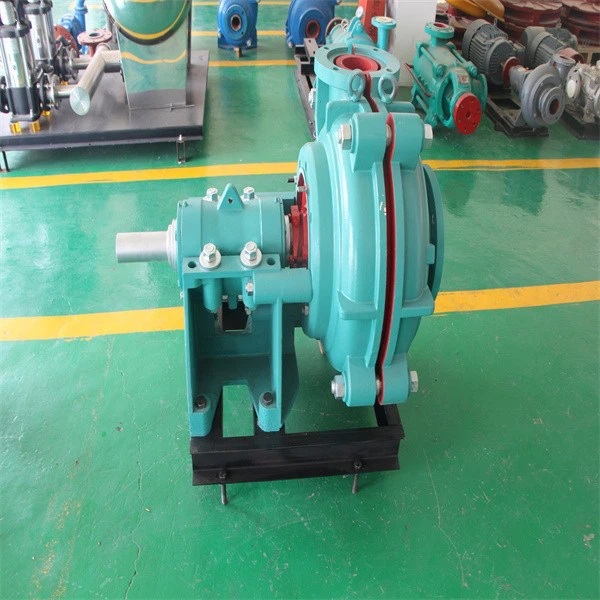
Now, the Ah Slurry Pump is a popular choice in many industries, especially Horizontal Centrifugal Slurry Pump and Slurry Pump for Mining. It's known for its durability and efficiency in handling abrasive and high - density slurries. But when it comes to viscosity, there are limits.
The maximum viscosity an Ah Slurry Pump can handle isn't a one - size - fits - all number. It depends on several factors. One of the key factors is the pump's design and size. Larger pumps generally have a better ability to handle higher - viscosity slurries. This is because they have more power and a larger flow path, which allows the thick slurry to move through more easily.
Another important factor is the impeller design. The impeller is the part of the pump that rotates and creates the force to move the slurry. A well - designed impeller can handle higher - viscosity slurries more effectively. For example, an impeller with wider vanes can provide more space for the thick slurry to pass through, reducing the risk of clogging.
The speed of the pump also plays a role. Running the pump at a lower speed can sometimes help in handling higher - viscosity slurries. This is because at lower speeds, the slurry has more time to move through the pump, and there's less chance of it getting stuck or causing excessive wear on the pump components.
In general, an Ah Slurry Pump can handle viscosities in the range of a few hundred centipoise (cP) to several thousand cP. However, this is a very rough estimate. For slurries with viscosities up to around 1000 cP, most standard Ah Slurry Pumps can handle them without too many issues. But as the viscosity goes above 1000 cP, things start to get more challenging.
When dealing with high - viscosity slurries, we need to pay close attention to the pump's performance. High - viscosity slurries can cause increased wear on the pump components, especially the impeller and the casing. This is because the thick slurry puts more stress on these parts as it moves through the pump. To combat this, we often recommend using wear - resistant materials for the pump components.
We also need to consider the power requirements. As the viscosity of the slurry increases, the pump needs more power to move it. So, if you're planning to use an Ah Slurry Pump for a high - viscosity application, make sure your power supply can handle the additional load.
Let's talk about some real - world applications. In the mining industry, Slurry Pump for Mining often has to deal with slurries that can have relatively high viscosities, especially when the ore contains fine particles or when the slurry has a high solids concentration. In these cases, the Ah Slurry Pump needs to be carefully selected and configured to handle the specific viscosity of the slurry.
In the chemical industry, where slurries can be made up of various chemicals and solids, viscosity can also vary widely. Some chemical processes produce slurries with very high viscosities, and the Ah Slurry Pump needs to be adapted accordingly.
If you're thinking about using an Ah Slurry Pump for your application, it's crucial to test the slurry's viscosity accurately. There are several methods to measure viscosity, such as using a viscometer. Once you know the viscosity of your slurry, you can work with us to determine the best pump configuration for your needs.
We've had customers who were initially unsure about whether an Ah Slurry Pump could handle their high - viscosity slurry. But after a detailed analysis of their slurry properties and a proper pump selection, they were able to achieve great results. For example, one mining company was struggling with a slurry that had a viscosity of around 2000 cP. We recommended a larger - sized Ah Slurry Pump with a specially designed impeller, and it worked like a charm. The pump was able to handle the thick slurry efficiently, reducing downtime and maintenance costs.
So, if you're in the market for an Ah Slurry Pump and have questions about viscosity, don't hesitate to reach out. We're here to help you find the right solution for your specific application. Whether you're dealing with a low - viscosity or a high - viscosity slurry, we have the expertise and the products to meet your needs.
Contact us today to start a conversation about your slurry pumping requirements. We can discuss your application in detail, analyze your slurry properties, and recommend the best Ah Slurry Pump for you. Let's work together to ensure your slurry pumping process is as efficient and cost - effective as possible.
References

- "Slurry Pump Handbook" - A comprehensive guide on slurry pump operation and performance.
- Industry research papers on slurry pump applications in mining and chemical industries.