

Hey there! As a supplier of Hydraulic Sludge Pumps, I often get asked about the vibration level of these pumps during operation. It's a crucial aspect that can impact the performance, reliability, and lifespan of the pump. So, let's dive into what the vibration level of a hydraulic sludge pump really means and why it matters.
Understanding Vibration in Hydraulic Sludge Pumps
First off, vibration in a hydraulic sludge pump is basically the back - and - forth movement that occurs while the pump is running. It can be caused by a variety of factors. One of the main culprits is the unbalanced forces within the pump. For example, if the impeller inside the pump isn't perfectly balanced, it can create an uneven distribution of mass. As the impeller spins at high speeds, this imbalance leads to vibrations.
Another factor is the flow of the sludge itself. Sludge is a thick, viscous mixture, and its flow through the pump can be turbulent. This turbulent flow can cause pressure fluctuations, which in turn result in vibrations. Also, the interaction between the pump and the piping system can contribute to vibration. If the piping is not properly supported or aligned, it can transfer vibrations from the pump to the surrounding structure.
Why Vibration Level is Important
The vibration level of a hydraulic sludge pump is not something to be ignored. High levels of vibration can cause a whole bunch of problems. For starters, it can lead to increased wear and tear on the pump components. The constant shaking can loosen bolts and nuts, damage seals, and even crack the pump casing over time. This not only reduces the efficiency of the pump but also increases the likelihood of breakdowns and costly repairs.
Vibration can also have an impact on the performance of the pump. Excessive vibration can disrupt the smooth flow of sludge, leading to reduced flow rates and lower pressure outputs. This can be a real headache in applications where a consistent and reliable flow of sludge is required, such as in wastewater treatment plants or mining operations.
Moreover, high - vibration levels can be a safety hazard. They can cause noise pollution, which is not only annoying but can also be harmful to the health of workers in the vicinity. In extreme cases, severe vibrations can even cause the pump to become unstable, posing a risk of the pump tipping over or detaching from its mounting.
Measuring Vibration Levels
So, how do we measure the vibration level of a hydraulic sludge pump? Well, there are several methods and tools available. One common way is to use vibration sensors. These sensors can be attached to different parts of the pump, such as the motor, the impeller housing, or the piping. They measure the amplitude and frequency of the vibrations and convert this data into electrical signals.

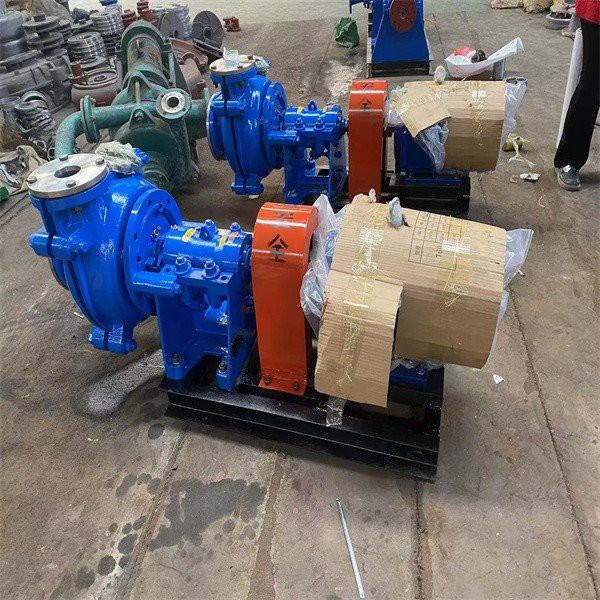
The amplitude of the vibration refers to the maximum displacement of the vibrating object from its equilibrium position. A higher amplitude usually indicates a more severe vibration. The frequency, on the other hand, is the number of vibrations per unit of time. Different types of problems in the pump can cause vibrations at specific frequencies. For example, an unbalanced impeller might cause vibrations at a frequency related to the rotational speed of the impeller.
Once the vibration data is collected, it can be analyzed using specialized software. This software can help identify the root cause of the vibrations and determine whether the vibration levels are within acceptable limits. Industry standards and guidelines often specify the maximum allowable vibration levels for different types of pumps. If the measured vibration levels exceed these limits, it's a sign that something is wrong with the pump and needs to be addressed.
Controlling Vibration Levels
If the vibration levels of a hydraulic sludge pump are too high, there are several steps that can be taken to control them. First, we can ensure proper installation of the pump. This includes making sure that the pump is correctly aligned with the piping system and that all the mounting bolts are tightened to the recommended torque. Proper alignment helps to reduce the stress on the pump components and minimizes the transfer of vibrations.
Balancing the impeller is another important step. This involves adjusting the mass distribution of the impeller to make it as balanced as possible. There are specialized balancing machines that can be used to achieve this. By balancing the impeller, we can significantly reduce the vibrations caused by the unbalanced forces.
We can also improve the flow conditions of the sludge. This can be done by using proper inlet and outlet piping designs. For example, using larger diameter pipes can reduce the velocity of the sludge flow, which in turn can reduce the turbulence and pressure fluctuations. Additionally, installing flow straighteners or diffusers can help to smooth out the flow of sludge and minimize vibrations.
Related Products
If you're interested in other types of pumps, we also offer Electric Sludge Pum, Concrete Slurry Pump, and High Pressure Slurry Pump. These pumps have their own unique features and applications, and they are also designed to operate with minimal vibration for optimal performance.
Conclusion
In conclusion, the vibration level of a hydraulic sludge pump during operation is a critical factor that can affect the pump's performance, reliability, and safety. By understanding the causes of vibration, measuring the vibration levels, and taking appropriate steps to control them, we can ensure that the pump operates smoothly and efficiently.
If you're in the market for a hydraulic sludge pump or have any questions about vibration levels or pump performance, don't hesitate to reach out. We're here to help you find the right pump for your needs and ensure that it operates at its best. Let's start a conversation and see how we can work together to meet your pumping requirements.
References
- "Pump Handbook" by Igor J. Karassik et al.
- Industry standards and guidelines for pump vibration measurement and control.


